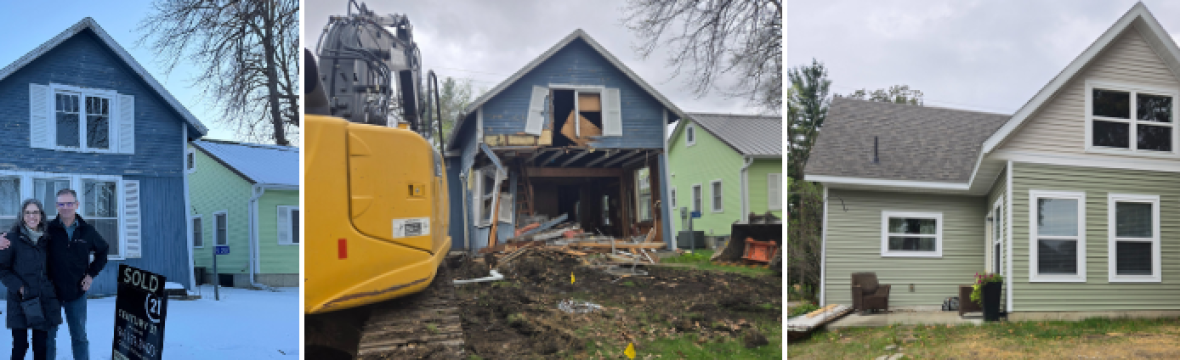

One year of demo dust, sweat, and endless decisions. As we look at our new home standing here today, we are reflecting on the biggest lessons learned in cabin demo and build projects like this one. It’s easy to think a brand-new house means problem-free. Many assume that because it’s new, there are zero mistakes, zero hiccups, and a flawless blueprint to follow
But let me give you a 12-month reality check. Building a cabin—even from scratch—is a masterclass in problem-solving and learning to laugh at yourself. Here are the four biggest things we’ve learned the hard way over the last year. If you are reading this, hopefully it might help you avoid similar problems (or provide you with comedic relief due to our naiveté!)
1. “Rough-In” Doesn’t Mean “Ready”
We hired our contractor to build our cabin shell. Because we aren’t professional builders, we assumed a “rough-in” meant the bones were ready for us to come in and hang drywall or ceiling covers. (After wiring, plumbing & insulation of course)
The reality is that it’s a completely different type of build. The ceiling rafters were roughed in, but they weren’t framed out to actually hold a finished ceiling. Now, we have a significant amount of extra framing work to do upstairs just to be able to put a ceiling on. (We were going to hire this job out but it’s going to be ao much work that no one wants the job…)


Our HVAC folks installed our Navien combi boiler, which is our in floor (& only) heat and on demand water heater. However there was no thermostat to make it run and they didn’t tell us it needed a water softener. So, basically it was installed. Just not to where it could be used. 🤦♀️
The Lesson: Ask every single question you can think of, and never assume what the next step requires or that your contractors will smoothly pass the baton. Don’t be afraid to clarify expectations.
2. Blueprints are Just Suggestions to Some Contractors
You don’t need to be a professional architect to look at blueprints and realize someone didn’t follow the lines. Even when everything is perfectly laid out on paper, real-world execution requires a watchful eye.
We had our house professionally spray-foam insulated, wrapped, and (we) sided. Yet, we still found air gaps leaking into the cabin from a ton of unexpected spaces. From insulation gaps to contractors completely ignoring layout lines (like our shower drain and washer/dryer hookups), you have to inspect absolutely everything and clarify, clarify, clarify.
The Lesson: (see above)
3. Everything Takes 10x Longer Than You Think (or at least than I thought)
One of the most humbling lessons learned in cabin demo and build timelines is that everything takes twice as long as you think. Time moves differently in the world of construction. Patience isn’t just a virtue out here—it’s a survival tactic.
Our bathroom is the ultimate example. After discovering hidden mold, we had to completely tear it back apart and start over. When we finally got down to the finishing details, I genuinely thought we’d wrap the whole thing up in a single weekend. It took six more weeks.
The silver lining? It’s done right. We can finally relax knowing there is no mold hiding behind those walls. But those quick weekend projects almost always turn into a months-long marathon.


Siding was another example. I thought we would whip it out over Labor Day weekend. (Everyone who knows anything about siding can LOL right now!) We weren’t even close at the end of the weekend and that was with two of our sons lending a hand!
The Lesson: Give yourself goals, but be gentle with the deadlines (and with yourself!)
4. Sticking to a Budget Means Embracing “Not Yet” or “Pivot”
Sticking to a budget (or blowing the budget by knocking down your house & rebuilding) means getting creative, and honestly, the constraints often lead to the best design choices. One of my favorite gems is a set of drawers that fit perfectly in the kitchen and Mike created a storage “garage” underneath it for our robot vacuum
For me, being budget conscious meant saying goodbye to the expensive scalloped siding on the peaks that I really wanted. I compromised, used a siding simulator and colored pencils to envision options, and the cabin still has total cottage charm.
We’ve always known that upcycling isn’t just a trend—it’s a mindset, but has been especially true while we’ve been balancing a new build. It’s about reimagining what you already have, saving salvaged wood from the original cabin, and hunting for gems at the Habitat ReStore or Facebook Marketplace. It also means accepting that it’s okay not to have certain things you want… yet. Our $10 church pew is proof that patience beats impulse buying every single time!
The Lesson: There are always other ways to get to the same goal.


🏚Choosing Fun Over Safe
One year later, two teachers who always chose the safe route are still standing—and so is the newly built cabin (although now it has storm damage!!). We have a pink bathroom, ashiplap wall made of hundred-year-old floors, and stairs you can actually walk down safely. f there is one takeaway from all the lessons learned in cabin demo and build phases, it’s to embrace the hiccups
We could never have made it through this year without our community—the friends who loaned us tools, places to stay, offered tips, and everyone online who showed up with encouragement.
Memorial Day Weekend involved a bunch of landscaping, removing overgrowth from a badly neglected area that was once meticulously maintained, and taking time to get out on the boat! Next, we’re tackling that church pew banquette seating (again), adding mini-splits, and maybe get the butcher block countertops cut and sealed. Wish us luck, and follow along to see how they turn out!
Have you ever had a project take way longer than expected, or had to learn a contractor lesson the hard way? Let me know in the comments below!
